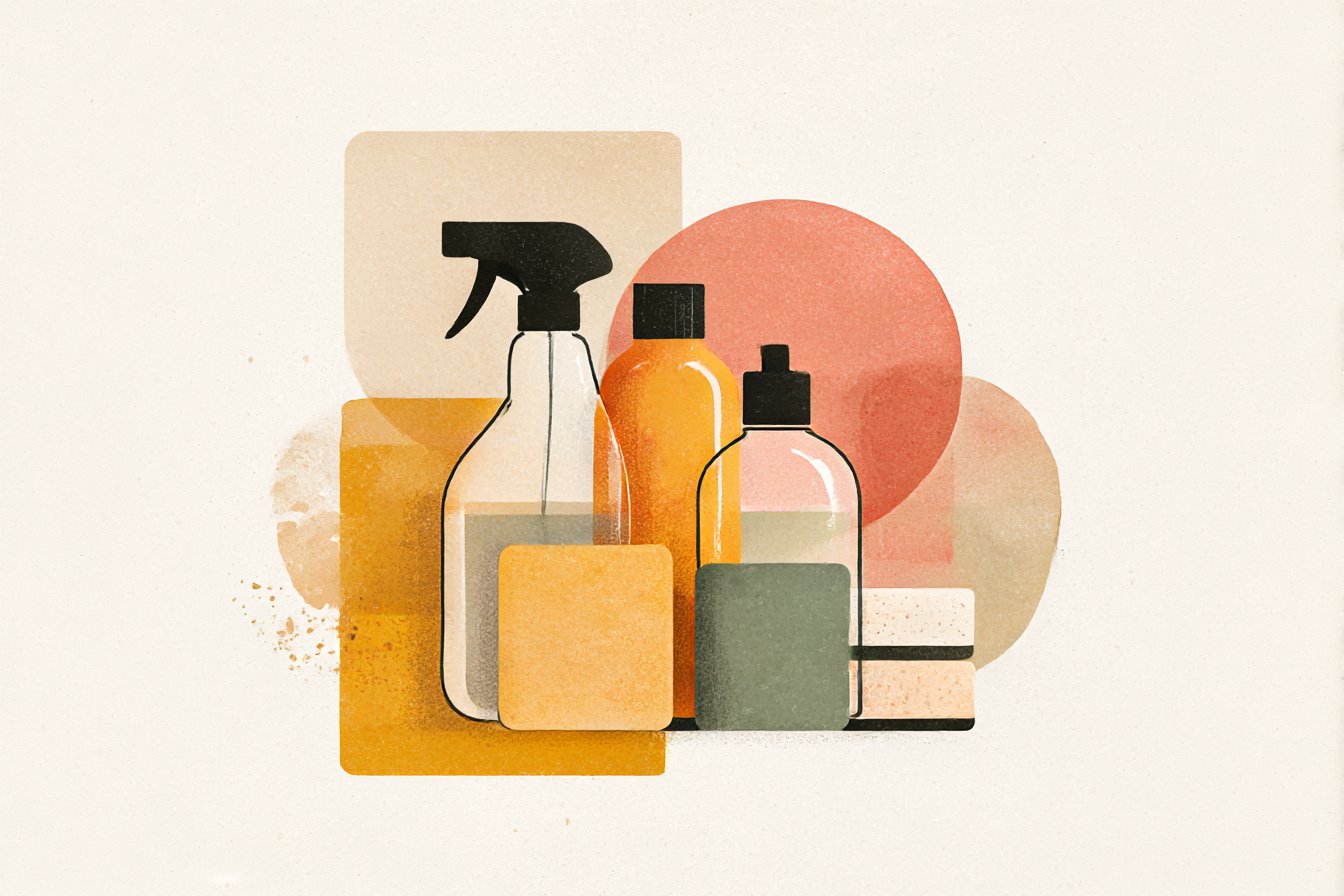
You know what they don't tell you about those industrial-strength bathroom cleaners? They can drop you faster than a bad electrical shock. I'm working on this mold problem in our upstairs bathroom – nothing major, just the usual Philadelphia rowhouse dampness issues we all deal with – and I'm going at it with this cleaner that promises to kill everything from mold to small mammals. Ten minutes in, I'm on the bathroom floor seeing stars, head pounding like someone's using a jackhammer inside my skull.
Took sixteen hours for that migraine to quit, and let me tell you, lying in bed feeling like death will give you time to think. What the hell was I spraying around my house that could knock me flat like that? I mean, I work with electricity for a living – I'm pretty careful about things that can hurt me.

But here I was, poisoning myself with bathroom cleaner because the bottle said it would make everything sparkle.
My wife had been after me for years to try those natural cleaning products. You know the drill – vinegar this, baking soda that, essential oils for everything. I'd tried some of it before but honestly? Most of it sucked. The vinegar left everything smelling like a hoagie shop, the homemade laundry soap made our clothes feel like cardboard, and don't get me started on that natural deodorant phase. Let's just say my coworkers weren't impressed.
But that migraine changed things. I wasn't about to switch to products that didn't work, but I figured there had to be something better than nearly gassing myself to death every time I cleaned the shower. Started doing what I do with any electrical problem – research the hell out of it until I find a solution that actually works.
Spent months testing everything. Made my own cleaners, bought every natural product at the store, drove my family crazy with my experiments. My youngest boy started calling it "Dad's weird science project," which wasn't entirely wrong. I had spreadsheets rating cleaning power, cost, smell – the whole nine yards. My wife just shook her head and said at least I was finally interested in housework.

Here's what I learned about the toxic stuff we're all using without thinking twice. Most household cleaners are loaded with chemicals that sound like they belong in a factory – phthalates, formaldehyde, ammonia, chlorine bleach. These aren't just harsh on dirt, they're harsh on us. The stuff evaporates into the air we breathe, sits on surfaces we touch, gets absorbed through our skin. We're basically marinating in low-level poison every day.
For someone like me who works in people's houses constantly, I see this stuff everywhere. Customers have cleaning products under every sink that could probably strip paint. Half of them don't even read the warning labels – and trust me, if something needs that many warnings, maybe we shouldn't be spraying it around where our kids play.
So I started testing alternatives, and let me tell you, finding ones that actually work took some doing. For that bathroom mold that started this whole mess, I finally found something that works as well as the migraine juice: baking soda mixed with hydrogen peroxide into a paste. Spread it on the moldy spots, let it sit for an hour, then scrub it off. Works just as well without making me feel like I need medical attention.
For regular bathroom cleaning, I mix equal parts water and white vinegar in a spray bottle, add about twenty drops of tea tree oil. The tea tree oil is key – kills germs and covers up that vinegar smell that makes the bathroom smell like a fish and chips place. First time I tried straight vinegar, my wife asked if I was planning to serve french fries with dinner.
Simplest discovery was for windows and mirrors – just water and a good microfiber cloth. I was skeptical as hell about this one, figured there had to be more to it. But it works better than any commercial window cleaner I've used, no streaks, no chemical smell, costs basically nothing. When there's something really stuck on there, tiny squirt of dish soap in the water handles it.
Kitchen cleaning was trickier because you're dealing with food safety. Can't mess around when it comes to bacteria on surfaces where you prep meals. Tested a bunch of options and found that 3% hydrogen peroxide – the same stuff you use on cuts – kills germs just as well as the harsh chemicals without leaving residue on your countertops. Spray it on, let it sit a minute, wipe it off. Done.
For everyday kitchen cleaning, I use castile soap diluted with water. Cleans everything from counters to the stovetop, doesn't leave any nasty chemicals behind. Add some lemon essential oil and it smells decent too, instead of like a hospital or chemical plant.
Oven cleaning – that's where I expected natural stuff to fail completely. My previous attempts with baking soda had me scrubbing for hours with mediocre results. Turns out timing is everything. Make a paste with baking soda and water, coat the inside of your oven with it, then leave it overnight instead of just an hour. Next day, the baked-on mess comes right off. Takes longer than the chemical stuff but doesn't make you feel like you need a gas mask.
You Might Also Like

Laundry was a pain in the ass to figure out. Most homemade laundry soaps left our clothes feeling stiff or not really clean. I run almost every day, so the sweat factor is real – need something that actually works on workout gear. Finally found a commercial natural detergent with enzymes that works as well as the old stuff. Costs more, but I started using wool dryer balls instead of dryer sheets, which saves money and avoids all those synthetic fragrances that make my wife's skin break out.
For stains, hydrogen peroxide works on most organic stuff – blood, food, grass. Oil stains get pre-treated with washing soda (stronger than baking soda) mixed with a little castile soap. Breaks down the oils without harsh solvents.
Personal care products were the hardest switch because the results are right there on your body. Nobody wants to be the guy with deodorant that quits working halfway through the day. Tried at least a dozen natural deodorants before finding one that could handle a full day of electrical work in July heat. The one that works has magnesium hydroxide – neutralizes the bacteria that cause smell without aluminium or synthetic fragrance.
Shampoo was another journey. Tried that "no-poo" thing where you use baking soda and apple cider vinegar instead of shampoo. Three weeks later my hair looked like I'd dunked it in motor oil and my scalp was flaking like old paint. Not exactly the miracle cure the internet promised. Finally found a shampoo bar that actually cleans without sulfates or parabens. Hair looks better now than it did with the old stuff, which I think was stripping too much oil and making my scalp overproduce to compensate.
Biggest surprise was pest control. Figured you'd need serious chemicals to deal with ants, spiders, mice – the usual old house problems we get in Philly. Wrong again. For ants, spray of half vinegar, half water erases their scent trails and confuses the whole colony. Spiders hate peppermint oil – spray it around doors and windows, keeps them from coming inside in the first place. For mice, steel wool stuffed in entry points plus humane traps works better than poison and doesn't risk poisoning the neighborhood cats.
It's been three years since that bathroom incident, and probably ninety percent of what's under our sinks now is non-toxic. Headaches are way less frequent, my wife's skin cleared up, and those chronic sinus problems I'd blamed on construction dust have mostly disappeared. Could be coincidence, but the research backs it up – plenty of studies link household chemicals to respiratory problems, hormone issues, skin irritation.
Money-wise it's been about a wash. Some natural products cost more upfront, but basics like vinegar, baking soda, castile soap are way cheaper than commercial cleaners, especially buying in bulk. Probably spend about the same overall but with way less packaging waste since most natural stuff is concentrated or comes in bars.
What surprised me most was how my standards changed. At first I was comparing everything to the old products – expecting the same smell, same sparkle, same everything. But after a few months I started appreciating different things – bathroom smelling fresh without that chemical undertone, skin not feeling dried out after cleaning, not worrying about what I'm breathing when I'm scrubbing the tub.
Not everything worked, obviously. Homemade dishwasher detergent was a complete disaster – left film on everything, had to rewash half our dishes. Natural sunscreen experiment left me looking like I'd been rolled in flour and still managed to get sunburned. Furniture polish made from olive oil left our dining room table sticky for weeks. Some things I've made peace with buying commercial, just choose the least toxic options available.

That's the real lesson – it's not about being perfect or pure. It's about making better choices where you can, focusing on the stuff that has the biggest impact. For me that meant starting with things I use every day – laundry detergent, hand soap, all-purpose cleaner – and stuff that was obviously making me sick, like that bathroom cleaner from hell.
Other day I was helping my mom clean out her house, found all her old cleaning products under the kitchen sink. Opened one bottle to smell it and it was like a time machine – except now that smell that used to mean "clean" to me just smelled artificial.

Chemical. My nose had reset its baseline.
If you're thinking about making similar changes, don't try to do everything at once. When I first had my chemical awakening, I went through the house like a maniac throwing everything out in one afternoon. Then I had nothing to clean with and had to make emergency trips to the store for replacements I hadn't researched. Expensive and frustrating. Better to replace stuff as it runs out, gives you time to research what actually works for your situation.
And maybe don't go as overboard with the testing as I did. My family still makes fun of my spreadsheets rating bathroom towel fluffiness based on different drying methods. Apparently not everyone needs that level of analysis, but hey, at least I know what works.

Larry’s a mechanic by trade and a minimalist by accident. After years of chasing stuff, he’s learning to live lighter—fixing what breaks, buying less, and appreciating more. His posts are straight-talking, practical, and proof that sustainable living doesn’t have to mean fancy products or slogans.